Pentax K-3 Mark III Review: A Powerful APS-C DSLR for Photography Enthusiasts
The Pentax K-3 Mark III is a premium APS-C DSLR designed for photographers who prefer the traditional DSLR shooting experience while still demanding modern performance. It combines a high-resolution 25.7-megapixel back-illuminated CMOS sensor, fast continuous shooting, advanced autofocus, five-axis in-body image stabilization, a large optical viewfinder, dual SD card slots, and a rugged weather-resistant body.
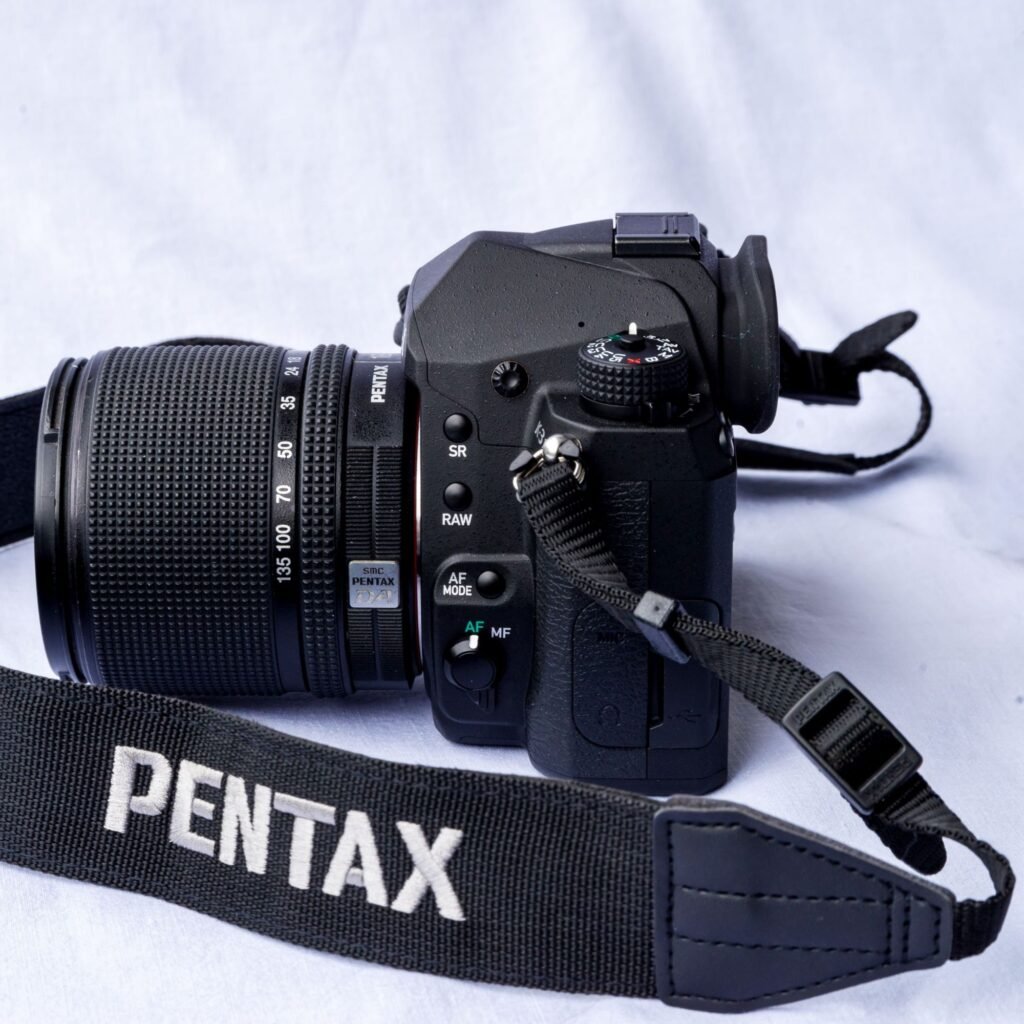
Unlike many modern cameras that have moved almost entirely toward mirrorless technology, the K-3 Mark III continues to focus on the strengths of a traditional DSLR: a bright optical viewfinder, physical controls, strong ergonomics, excellent battery life, and a durable body designed for outdoor photography.
With a maximum continuous shooting speed of approximately 12 frames per second in AF.S mode, 101 autofocus points, ISO sensitivity reaching an impressive ISO 1,600,000, and 4K video recording, the camera is capable of handling everything from travel and street photography to wildlife and action shooting.
Pentax K-3 Mark III Overview
The Pentax K-3 Mark III is an APS-C-format DSLR using the Pentax K-mount system. Its 25.7MP back-illuminated CMOS sensor is designed to deliver detailed images while maintaining good noise performance at higher ISO settings.
One of the camera’s biggest attractions is its five-axis SR II in-body Shake Reduction system. Because stabilization is built into the camera body, compatible Pentax lenses can benefit from image stabilization without requiring optical stabilization inside the lens.
The camera also features a large 3.2-inch touchscreen with approximately 1.62 million dots and a high-quality pentaprism optical viewfinder offering approximately 100% field of view and 1.05x magnification.
Pentax K-3 Mark III Key Specifications
Specification Pentax K-3 Mark III Camera Type APS-C DSLR Sensor Back-illuminated CMOS Effective Resolution Approx. 25.73 MP Sensor Size 23.3 × 15.5 mm Processor PRIME V Native ISO Range ISO 100–1,600,000 Image Stabilization 5-axis SR II Autofocus System SAFOX 13 AF Points 101 points Cross-Type Points 25 Maximum Shooting Speed Approx. 12 fps Shutter Speed Up to 1/8000 sec Viewfinder Pentaprism optical Viewfinder Coverage Approx. 100% Viewfinder Magnification Approx. 1.05x LCD 3.2-inch touchscreen LCD Resolution Approx. 1.62 million dots Video 4K up to 30p Storage Dual SD card slots Stabilization 5-axis sensor-shift Connectivity Wi-Fi and Bluetooth Lens Mount Pentax KAF2 / K-mount Battery D-LI90 Battery Rating Approx. 800 shots Body Material Magnesium alloy Weight Approx. 735g body only Weather Resistance Yes Cold Resistance Down to approximately -10°C
Specifications are based on Ricoh Imaging’s official information.
25.7MP APS-C Sensor and Image Quality
The Pentax K-3 Mark III uses a newly developed back-illuminated CMOS sensor with approximately 25.7 effective megapixels.
The sensor provides enough resolution for detailed landscape photographs, portraits, wildlife images, street photography and commercial work. The APS-C format also provides a crop advantage when using telephoto lenses, which can be useful for photographing birds and distant subjects.
Pentax’s imaging system is designed to preserve fine textures and subject details while controlling noise. The manufacturer also highlights improvements in image processing and detail reproduction through its PRIME V imaging engine.
For photographers who frequently crop wildlife or sports photographs, the combination of 25.7MP resolution and an APS-C sensor can be particularly useful.
Extremely High ISO Sensitivity
One of the most unusual specifications of the K-3 Mark III is its maximum selectable sensitivity of ISO 1,600,000.
This does not mean that every photograph taken at ISO 1,600,000 will have the same quality as an image captured at low ISO. Extremely high ISO settings are primarily useful when the photographer needs to record an image under very dark conditions.
For everyday photography, lower ISO settings will normally provide cleaner and more detailed results. However, the huge ISO range gives photographers considerable flexibility when working in challenging lighting conditions.
Ricoh Imaging states that the sensor and image-processing system were designed to reduce noise while retaining subject outlines and texture at high sensitivities.
5-Axis In-Body Image Stabilization
The K-3 Mark III includes Pentax’s SR II five-axis sensor-shift Shake Reduction system.
This is one of the camera’s most useful features because stabilization takes place inside the camera body. Instead of relying entirely on optical stabilization in the lens, the sensor itself moves to compensate for camera movement.
This can be useful for:
- Handheld landscape photography
- Travel photography
- Street photography
- Indoor photography
- Low-light shooting
- Portrait photography
- Telephoto photography
The stabilization system can also work with a wide range of Pentax K-mount lenses, including older compatible lenses.
101-Point SAFOX 13 Autofocus System
Pentax equips the K-3 Mark III with the SAFOX 13 autofocus system, featuring 101 autofocus points, including 25 cross-type points.
The system is designed for both single-shot and continuous autofocus. The camera can operate down to approximately EV -4 under specified conditions, although the exact low-light AF performance depends on the lens and shooting situation.
The autofocus system can be useful for:
- Wildlife
- Birds
- Sports
- Children
- Street photography
- Events
- Portraits
- General everyday photography
For photographers who prefer selecting their own AF point, the camera provides several AF-area options rather than forcing the user to rely entirely on automatic focusing.
Fast 12 FPS Continuous Shooting
The Pentax K-3 Mark III is surprisingly fast for a DSLR.
It can shoot at approximately 12 frames per second in AF.S mode and approximately 11 frames per second in AF.C mode under the manufacturer’s specified conditions.
This makes it particularly attractive for action photographers.
A fast continuous shooting mode can help capture:
- Birds taking flight
- Running animals
- Sports action
- Motor racing
- Children playing
- Dance performances
- Fast-moving wildlife
The actual shooting speed and buffer performance can vary depending on the lens, shutter settings, ISO, file format and memory card.
1/8000 Second Maximum Shutter Speed
The mechanical shutter can operate at speeds up to 1/8000 second.
This is useful when photographing fast-moving subjects or when using wide-aperture lenses in bright outdoor conditions.
For example, when using a fast prime lens such as an f/1.4 lens in bright sunlight, a fast shutter speed can help maintain the desired aperture without excessively overexposing the image.
Large 1.05x Optical Viewfinder
One of the strongest reasons to choose the K-3 Mark III over many mirrorless alternatives is its optical viewfinder.
The camera uses a pentaprism optical finder with approximately 100% field of view and approximately 1.05x magnification.
The large viewfinder provides a natural shooting experience and makes composing photographs enjoyable, particularly for photographers who prefer looking through an optical finder rather than an electronic display.
This is especially valuable for:
- Street photographers
- Wildlife photographers
- Portrait photographers
- Event photographers
- Traditional DSLR users
3.2-Inch High-Resolution Touchscreen
The rear display measures 3.2 inches and uses approximately 1.62 million dots.
The touchscreen can be used for various camera operations, while the physical controls and electronic dials provide additional ways to change settings.
The combination of a touchscreen and traditional DSLR controls gives the camera flexibility without abandoning the tactile experience that many Pentax users prefer.
4K Video Recording
Although the K-3 Mark III is primarily designed as a still-photography camera, it also supports 4K video.
The camera can record:
- 4K 3840 × 2160 at 30p
- 4K 3840 × 2160 at 24p
- Full HD 1920 × 1080 at 60p
- Full HD 1920 × 1080 at 30p
- Full HD 1920 × 1080 at 24p
It also supports an external stereo microphone and adjustable recording levels.
However, photographers who are primarily interested in professional video may find modern mirrorless cameras more attractive because they often provide more advanced video-oriented features.
Dual SD Card Slots
The K-3 Mark III provides two SD memory card slots, with the first slot supporting UHS-II for high-speed operation.
The camera allows different recording configurations, including sequential recording, duplicate recording and RAW/JPEG separation.
Dual card slots are especially useful for professional photographers because they can create an additional copy of important photographs while shooting.
For weddings, events and paid assignments, this can provide an extra layer of protection against memory-card problems.
Strong Magnesium-Alloy Body
Pentax has paid considerable attention to the physical construction of the K-3 Mark III.
The camera uses a magnesium-alloy outer body designed to provide a strong combination of durability and relatively manageable weight. Ricoh Imaging also describes the camera as dustproof and weather-resistant.
The camera is also designed to operate in temperatures as low as approximately -10°C, making it suitable for demanding outdoor environments when used appropriately.
When combined with a compatible AW or WR weather-resistant lens, the system provides better protection for outdoor shooting.
Battery Life
The K-3 Mark III uses the D-LI90 battery.
Ricoh Imaging rates battery performance at approximately 800 images under its stated CIPA testing conditions. Actual battery life can vary significantly depending on continuous shooting, Live View, video recording, wireless connectivity, temperature and other settings.
For travel or long outdoor shoots, carrying an additional battery is still recommended.
Pentax K-Mount Lens Compatibility
The K-3 Mark III uses the Pentax K-mount system and supports a wide range of K-mount lenses.
This is an important advantage for photographers who already own Pentax lenses.
The system includes options for:
- Wide-angle photography
- Portrait photography
- Wildlife
- Macro photography
- Landscape photography
- Sports
- Street photography
Pentax’s compatibility with many older lenses also makes the camera interesting for photographers who enjoy using classic optics.
Recommended Lens Types
A good lens can make a bigger difference to your photography than simply upgrading the camera body.
For the K-3 Mark III, photographers may consider:
1. Wide-Angle Lens
Ideal for:
- Landscapes
- Architecture
- Travel
- Interiors
2. Standard Zoom Lens
A standard zoom is useful as an everyday lens because it covers multiple focal lengths in one package.
3. Fast Prime Lens
A fast prime lens is excellent for:
- Portraits
- Street photography
- Low-light photography
- Background blur
4. Telephoto Lens
A telephoto lens is highly useful for:
- Wildlife
- Birds
- Sports
- Distant subjects
The APS-C sensor’s crop factor can make telephoto photography particularly attractive.
Pentax K-3 Mark III for Wildlife Photography
The K-3 Mark III is a strong option for wildlife photographers who prefer DSLR cameras.
Its combination of:
- 25.7MP resolution
- APS-C sensor
- 12 fps continuous shooting
- 101-point autofocus
- In-body stabilization
- Durable weather-resistant body
makes it well suited to outdoor subjects.
A quality telephoto lens can turn the camera into a capable wildlife system.
The biggest limitation is that modern mirrorless cameras may offer more sophisticated subject-recognition and tracking technologies. However, the K-3 Mark III remains attractive for photographers who value Pentax’s DSLR handling and optical viewfinder.
Pentax K-3 Mark III for Landscape Photography
Landscape photographers can benefit from the detailed 25.7MP sensor, five-axis stabilization and rugged weather-resistant body.
The camera is especially appealing to photographers who spend long periods outdoors and want physical controls rather than relying heavily on touch menus.
Its relatively compact APS-C body can also be easier to carry than a large full-frame DSLR.
Pentax K-3 Mark III for Portrait Photography
The K-3 Mark III can produce high-quality portraits when paired with a fast prime lens.
A lens with a wide aperture can provide attractive background separation, while the high-resolution sensor captures plenty of facial and clothing detail.
For professional portrait photographers, a full-frame camera may still provide an advantage in terms of depth-of-field control, but the K-3 Mark III can be an excellent APS-C portrait camera.
Pentax K-3 Mark III for Street Photography
Street photographers may particularly appreciate the camera’s optical viewfinder, physical controls, durable construction and relatively compact APS-C format.
The camera also provides multiple customization options, allowing photographers to configure controls according to their shooting style.
The DSLR form factor is larger than many modern mirrorless cameras, but photographers who prefer traditional handling may consider this a benefit rather than a disadvantage.
Pentax K-3 Mark III for Travel Photography
The K-3 Mark III is well suited to photographers who want a rugged travel camera.
Its weather-resistant construction, strong battery performance, built-in stabilization and dual SD card slots are useful for extended trips.
The main consideration is weight. At approximately 820g with battery and SD card, it is not an ultra-light travel camera.
Pentax K-3 Mark III Pros and Cons
Pros
- Excellent 25.7MP APS-C sensor
- Very high maximum ISO range
- 5-axis in-body image stabilization
- Fast 12 fps continuous shooting
- 101-point autofocus system
- Large 1.05x optical viewfinder
- 100% viewfinder coverage
- High-resolution 3.2-inch touchscreen
- 4K video recording
- Dual SD card slots
- Magnesium-alloy construction
- Dustproof and weather-resistant design
- Cold-resistant body
- Strong battery life
- Excellent compatibility with Pentax K-mount lenses
Cons
- Heavy compared with many modern APS-C mirrorless cameras
- Autofocus tracking is less sophisticated than some newer mirrorless systems
- No fully articulated rear screen
- Video features are not its main strength
- K-mount lens ecosystem is smaller than Canon RF, Sony E or Nikon Z ecosystems
- Extremely high ISO settings should not be confused with equally high image quality
Pentax K-3 Mark III vs Pentax K-1 Mark II
The K-3 Mark III and K-1 Mark II target different photographers.
The K-3 Mark III uses an APS-C sensor and offers a faster maximum continuous shooting rate of approximately 12 fps. The K-1 Mark II uses a larger full-frame sensor and is better suited to photographers who prioritize full-frame image characteristics and very high resolution. Ricoh’s comparison data lists the K-1 Mark II at approximately 6.4 fps and the K-3 Mark III at approximately 12 fps.
Choose the K-3 Mark III if speed, compactness and wildlife/action photography are priorities.
Choose the K-1 Mark II if you prefer full-frame photography, especially for landscapes, portraits and other situations where the larger sensor is beneficial.
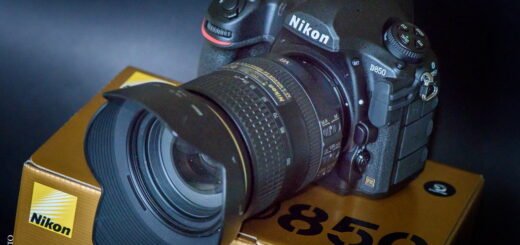
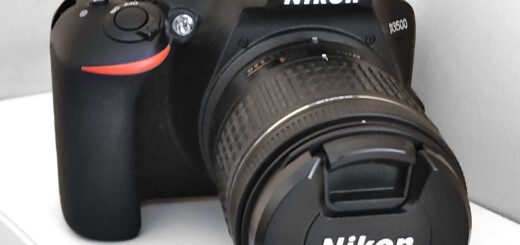
Pentax K-3 Mark III vs Nikon D500
The Nikon D500 is another highly regarded APS-C DSLR designed for serious photography.
Both cameras are particularly interesting for wildlife and action photographers because they combine APS-C sensors with fast shooting and advanced autofocus systems.
The K-3 Mark III has the advantage of a newer design, five-axis in-body stabilization, a very high maximum ISO setting and an exceptionally large optical viewfinder.
The D500 has a mature Nikon F-mount ecosystem and remains attractive to photographers who already own Nikon lenses.
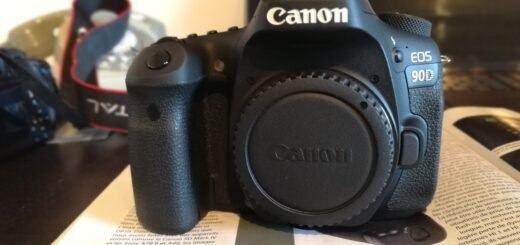
Pentax K-3 Mark III vs Canon EOS 90D
The Canon EOS 90D and Pentax K-3 Mark III are both high-resolution APS-C DSLRs.
The Canon is attractive for photographers already invested in the Canon EF/EF-S ecosystem, while the Pentax offers five-axis sensor stabilization and a particularly rugged body.
For photographers who already own Pentax lenses, the K-3 Mark III can be a very compelling choice.
Who Should Buy the Pentax K-3 Mark III?
The K-3 Mark III is best suited for:
- Serious photography enthusiasts
- Pentax users upgrading from an older DSLR
- Wildlife photographers
- Bird photographers
- Landscape photographers
- Street photographers
- Outdoor photographers
- Travel photographers
- DSLR enthusiasts
- Photographers who prefer optical viewfinders
- Photographers with an existing Pentax K-mount lens collection
Who Should Not Buy It?
The camera may not be the best choice for someone who:
- Mainly wants professional video
- Wants the smallest possible camera
- Requires the latest subject-detection autofocus
- Wants a huge modern mirrorless lens ecosystem
- Strongly prefers an electronic viewfinder
- Wants the lightest possible travel setup
In these situations, a modern mirrorless system may be a better fit.
Is Pentax K-3 Mark III Still Worth Buying?
Yes, especially for photographers who specifically want a premium APS-C DSLR.
The K-3 Mark III is not simply an old DSLR design with minor improvements. It combines a modern 25.7MP BSI sensor, five-axis stabilization, 101-point autofocus, fast continuous shooting, a large optical viewfinder, 4K video and a rugged magnesium-alloy body.
Its biggest appeal is that it provides a traditional DSLR experience while delivering performance that remains competitive for still photography.
However, buyers should carefully consider the broader camera system. If you are starting from zero and want the widest selection of new lenses and advanced autofocus technologies, a modern mirrorless platform may offer more long-term flexibility.
Final Verdict
The Pentax K-3 Mark III is one of the most capable APS-C DSLRs for photographers who value traditional camera handling.
Its 25.7MP sensor provides plenty of resolution, while the 5-axis stabilization system helps with handheld shooting. The 12 fps burst rate makes the camera suitable for action and wildlife, and the 101-point SAFOX 13 autofocus system provides a strong foundation for moving subjects.
The large 1.05x optical viewfinder is another major advantage. Combined with a magnesium-alloy, weather-resistant body, dual SD slots and approximately 800-shot battery rating, the camera is particularly attractive to outdoor photographers.
Its main weaknesses are the DSLR system’s larger size and weight, the smaller K-mount ecosystem compared with leading mirrorless platforms, and less advanced autofocus tracking than some newer mirrorless cameras.
For photographers who love Pentax cameras and want a high-performance APS-C DSLR, however, the K-3 Mark III remains an impressive choice.
Pentax K-3 Mark III Rating
Category Rating Image Quality 9/10 Autofocus 8.5/10 Continuous Shooting 9/10 Low-Light Performance 8.5/10 Video 7.5/10 Build Quality 9.5/10 Battery Life 9/10 Viewfinder 10/10 Wildlife Photography 9/10 Travel Photography 8.5/10 Overall 9/10
Frequently Asked Questions
1. Is the Pentax K-3 Mark III a full-frame camera?
No. The K-3 Mark III uses an APS-C-sized CMOS sensor measuring approximately 23.3 × 15.5 mm.
2. How many megapixels does the Pentax K-3 Mark III have?
It has approximately 25.73 effective megapixels.
3. What is the maximum ISO of the K-3 Mark III?
Its selectable sensitivity range extends up to ISO 1,600,000.
4. Does the Pentax K-3 Mark III have image stabilization?
Yes. It features a five-axis sensor-shift SR II Shake Reduction system.
5. How fast can the K-3 Mark III shoot?
It can shoot at approximately 12 frames per second in AF.S mode under specified conditions.
6. Does the K-3 Mark III record 4K video?
Yes. It supports 4K recording at 30p and 24p, as well as Full HD recording at up to 60p.
7. Does it have dual memory card slots?
Yes. It has two SD card slots, with the first slot supporting UHS-II.
8. Is the Pentax K-3 Mark III weather sealed?
Yes. The body is designed with dustproof and weather-resistant construction, and Pentax states that it has been tested for operation down to approximately -10°C.
9. Which lens mount does the K-3 Mark III use?
It uses the Pentax K-mount family, with compatibility covering KAF4, KAF3, KAF2, KAF and KA lenses according to Ricoh Imaging’s specifications.
10. Is the Pentax K-3 Mark III good for wildlife photography?
Yes. Its APS-C sensor, 12 fps burst shooting, 101-point autofocus system, in-body stabilization and compatibility with telephoto lenses make it a strong choice for wildlife and bird photography.
11. Is the K-3 Mark III good for beginners?
It can be used by beginners, but it is primarily aimed at serious enthusiasts and experienced photographers. Its extensive controls and advanced features may take some time to learn.
12. Is Pentax K-3 Mark III good for professional photography?
Yes, particularly for still photography such as wildlife, landscapes, travel, events and outdoor work. Whether it is the right professional camera depends on the photographer’s lens requirements, workflow and autofocus needs.