Canon EOS 7D Mark II Review: A High-Speed DSLR for Wildlife and Action Photography
The Canon EOS 7D Mark II is an APS-C DSLR built with one clear purpose in mind: fast and demanding photography. It was designed for photographers who regularly capture wildlife, birds, sports, motorsports, and other subjects where autofocus speed and continuous shooting matter more than having the highest possible resolution.
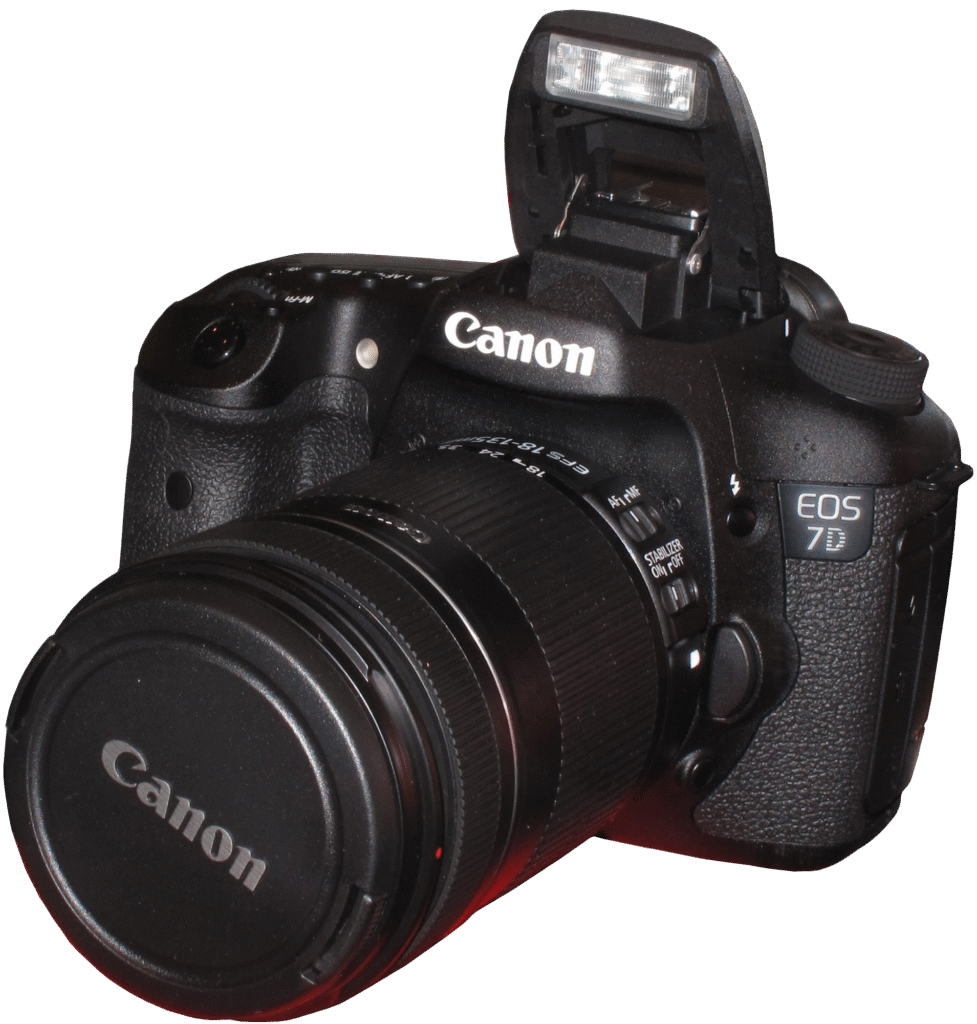
With a 20.2-megapixel APS-C CMOS sensor, dual DIGIC 6 processors, a sophisticated 65-point all-cross-type autofocus system, and continuous shooting of up to 10 frames per second, the 7D Mark II was a serious action-oriented camera in its generation.
Even today, it can remain interesting on the used market for photographers who prefer a traditional DSLR and want a relatively affordable body for wildlife or sports photography.
What Makes the 7D Mark II Different?
The EOS 7D Mark II is not simply an upgraded entry-level DSLR. Canon built it around speed, tracking, and durability.
Its biggest attractions include:
- 10 fps continuous shooting
- 65-point all-cross-type AF system
- Dual DIGIC 6 processors
- 20.2MP APS-C sensor
- 1.6x crop factor
- 1/8000-second maximum shutter speed
- Large image buffer
- Full HD video
- Dual Pixel CMOS AF
- Weather-resistant construction
- Dual memory-card formats
For photographers who spend most of their time photographing moving subjects, these features are more important than having a very high megapixel count.
Core Specifications
Specification Canon EOS 7D Mark II Camera Type APS-C DSLR Sensor 20.2MP CMOS Sensor Size Approx. 22.4 × 15.0 mm Processor Dual DIGIC 6 ISO Range 100–16,000 Expanded ISO Up to 51,200 Autofocus 65-point all-cross-type Continuous Shooting Up to 10 fps Maximum Shutter 1/8000 sec Video Full HD Viewfinder Optical LCD 3.0-inch fixed LCD Storage CompactFlash + SD Connectivity GPS, USB, HDMI Lens Mount Canon EF/EF-S Battery LP-E6N / LP-E6 family Weight Approx. 910g with battery and card
20.2MP APS-C Sensor
Canon uses a 20.2MP APS-C CMOS sensor in the 7D Mark II.
The resolution may appear modest compared with newer cameras, but Canon made a deliberate trade-off between resolution and high-speed performance.
The APS-C format also provides a 1.6x crop factor. This can be particularly useful with long lenses.
For example, a 400mm lens gives the same field of view as a 640mm lens would provide on a full-frame camera.
This doesn’t actually increase the lens’s optical magnification, but it does make the subject occupy more of the image frame.
That characteristic is one reason the 7D Mark II became popular among bird and wildlife photographers.
Designed for Wildlife and Birds
If wildlife photography is your priority, the 7D Mark II is one of the more interesting older Canon DSLRs to consider.
The combination of:
APS-C crop + 10 fps + 65-point AF + large buffer
makes it particularly suitable for subjects that move unpredictably.
Bird photography is a good example.
When a bird takes off, the photographer may need to capture several frames within a very short period. The 7D Mark II’s high-speed shooting mode allows the photographer to record a sequence rather than relying on a single exposure.
65-Point All-Cross-Type Autofocus
Autofocus is arguably the most important feature of the 7D Mark II.
Canon equipped it with 65 autofocus points, with all of them being cross-type under supported conditions.
This gives the camera a dense AF-point arrangement across the viewfinder.
The AF system provides multiple area-selection modes, allowing photographers to choose how much of the autofocus system should be involved in tracking a subject.
This can be useful when photographing:
- Birds in flight
- Football
- Cricket
- Motorsport
- Running athletes
- Wildlife
- Aircraft
- Children
- Pets
Intelligent Tracking and AF Customization
The 7D Mark II offers considerable control over autofocus behavior.
Photographers can adjust how the camera responds to changes in subject movement, tracking sensitivity, acceleration/deceleration, and AF-point behavior.
This is particularly useful for experienced wildlife and sports photographers who want to customize the autofocus system for a specific type of subject.
Beginners may need some time to understand these settings, but once configured properly they can make the camera much more predictable.
10 Frames Per Second
The camera can shoot at up to 10 frames per second.
That was a significant performance level for an APS-C DSLR and remains useful today.
For action photography, burst speed can make the difference between capturing the critical moment and missing it.
Imagine photographing:
- A bird catching a fish
- A football player kicking the ball
- A motorcycle passing a corner
- A horse jumping
- A child running
- A bird taking off
A 10 fps burst gives the photographer many more opportunities to capture the ideal frame.
Large Shooting Buffer
High-speed shooting is only useful if the camera can sustain a burst.
The 7D Mark II was designed with a substantial buffer for continuous photography, allowing photographers to capture extended sequences before the camera needs to slow down while writing data.
The exact number of frames depends on the recording format, memory card, and camera settings.
For wildlife photographers who shoot RAW bursts, using a fast and compatible memory card is recommended.
Dual DIGIC 6 Processors
Unlike many simpler Canon DSLRs, the 7D Mark II uses two DIGIC 6 processors.
The dual-processor design helps the camera handle high-speed continuous shooting, image processing, noise reduction, autofocus operations, and video recording.
This processing architecture was an important part of the camera’s performance-oriented design.
ISO Performance
The standard ISO range runs from 100 to 16,000, with expansion available up to ISO 51,200.
For daytime wildlife photography, ISO 100–800 can often provide very clean results.
Wildlife photographers frequently have to raise ISO because long telephoto lenses and fast shutter speeds require plenty of light.
The camera can therefore be useful in situations where ISO 1600, 3200, or higher becomes necessary.
As with any APS-C camera, increasing ISO introduces additional noise. Exposure technique and post-processing can have a significant impact on the final result.
1/8000-Second Shutter
The maximum shutter speed is 1/8000 second.
This is useful for freezing fast movement and for shooting with wide apertures under bright sunlight.
For wildlife, sports, and outdoor action photography, fast shutter speeds are often essential.
A bird flying toward the camera, for example, may require a shutter speed of 1/1600 sec or faster depending on the movement and desired result.
Optical Viewfinder
The 7D Mark II features an optical viewfinder with approximately 100% frame coverage.
For action photographers, an optical viewfinder can be very useful because the photographer sees the scene directly through the camera’s optical system.
The viewfinder also provides a clear shooting experience without relying on an electronic display.
LCD Screen
The camera has a 3.0-inch LCD monitor.
Unlike some newer cameras, the screen is fixed rather than articulating or touchscreen-enabled.
This is one of the areas where the age of the camera is immediately noticeable.
For traditional viewfinder-based photography this is not a major problem, but photographers who frequently shoot video or unusual angles may prefer a newer body.
Full HD Video
The 7D Mark II can record Full HD video.
It was designed primarily as a stills/action camera, but its video capabilities are adequate for basic filmmaking, interviews, YouTube content, events, and general recording.
It does not provide 4K recording.
That is an important consideration for modern content creators because 4K has become common across many newer cameras.
Dual Pixel CMOS AF for Live View
Canon’s Dual Pixel CMOS AF technology is another useful feature.
It provides phase-detection autofocus across the image sensor during supported Live View operations.
For video and Live View shooting, this can provide smoother focusing than older contrast-detection systems.
However, modern mirrorless cameras generally provide considerably more advanced subject recognition and tracking.
Build Quality
The EOS 7D Mark II has a robust body designed for demanding use.
Its construction and sealing make it better suited to outdoor photography than many entry-level Canon DSLRs.
For wildlife photographers working in dusty environments, outdoor sports photographers, and people who regularly shoot in challenging conditions, this durability is valuable.
Weather resistance does not mean waterproofing, however. Appropriate protection should still be used in heavy rain or extreme environments.
GPS Built In
One interesting feature is the camera’s integrated GPS functionality.
GPS can record location information with photographs, which can be useful for photographers who travel extensively or document wildlife locations.
This is a feature that is not always included in cameras of this class.
Memory Card Configuration
The 7D Mark II uses two different card formats:
- CompactFlash
- SD/SDHC/SDXC
Having two card slots gives photographers more flexibility when managing images.
For important assignments, photographers can configure the camera according to their preferred recording workflow.
Because CompactFlash is an older format, buyers purchasing a used 7D Mark II should check that both card slots work correctly.
Canon EF and EF-S Lens Support
The EOS 7D Mark II uses Canon’s EF/EF-S lens ecosystem.
This is a major advantage because there are many compatible lenses, including affordable used options.
For wildlife:
- 100–400mm-type zoom
- 300mm telephoto
- 400mm telephoto
- 500mm and longer lenses
For sports:
- 70–200mm-type zoom
- 100–400mm-type zoom
For general photography:
- 18–135mm-type zoom
- 15–85mm-type zoom
The APS-C sensor makes telephoto lenses especially useful for distant subjects.
7D Mark II for Sports
Sports photography is another area where the camera remains impressive.
The combination of 10 fps shooting and its advanced autofocus system makes it capable of following fast-moving subjects.
For outdoor sports such as football, cricket, athletics, and motorsport, the camera can produce strong results when paired with an appropriate telephoto lens.
Its fixed LCD is less important for photographers who primarily use the optical viewfinder.
7D Mark II for Portraits
The 7D Mark II can certainly be used for portraits, but portrait photography is not its primary specialization.
The 20.2MP sensor provides enough resolution for portraits, while Canon’s EF and EF-S lens selection includes several excellent portrait lenses.
An 85mm lens or a fast 50mm lens can produce attractive subject separation.
However, photographers primarily interested in portraits may prefer a full-frame Canon camera for its depth-of-field characteristics and larger sensor.
7D Mark II for Landscape Photography
The camera can produce detailed landscape images, but its APS-C sensor and 20.2MP resolution are less specialized for high-resolution landscape work than some full-frame alternatives.
Still, when paired with a good wide-angle lens, it can produce excellent travel and landscape photographs.
The built-in GPS can also be useful for photographers who want location information attached to their images.
7D Mark II vs Canon EOS 80D
The EOS 80D is a more general-purpose enthusiast DSLR, while the 7D Mark II is designed more specifically around action. Feature 7D Mark II 80D Resolution 20.2MP 24.2MP Processor Dual DIGIC 6 DIGIC 6 AF Points 65 all-cross-type 45 all-cross-type Burst 10 fps 7 fps Screen Fixed Vari-angle touchscreen Video Full HD Full HD GPS Yes No Main Strength Action General photography
For wildlife and sports, the 7D Mark II has a clear performance advantage.
For general-purpose shooting and flexible Live View operation, the 80D can be more convenient.
7D Mark II vs Canon EOS 90D
The EOS 90D is considerably newer. Feature 7D Mark II 90D Sensor 20.2MP APS-C 32.5MP APS-C Processor Dual DIGIC 6 DIGIC 8 Burst 10 fps Up to 10 fps Video Full HD 4K Screen Fixed Vari-angle touchscreen AF Viewfinder 65-point 45-point Wireless Wi-Fi/GPS Wi-Fi/Bluetooth Generation Older Newer
The 90D is the better all-around modern DSLR, particularly for resolution and video.
However, photographers who find a 7D Mark II at a much lower used price may still prefer its dedicated action-oriented autofocus system.
7D Mark II or Full-Frame DSLR?
This depends on what you photograph.
Choose the 7D Mark II if your priority is:
Speed + reach + autofocus.
Choose a full-frame DSLR if your priority is:
Low-light performance + shallow depth of field + maximum image quality.
For example, a bird photographer may benefit more from the 7D Mark II’s crop factor and fast burst shooting, while a wedding photographer may prefer a full-frame camera.
Advantages
Strong Action Performance
The 10 fps burst rate makes it excellent for fast-moving subjects.
Advanced Autofocus
The 65-point all-cross-type AF system is one of the camera’s biggest strengths.
Useful APS-C Crop Factor
The 1.6x crop can be advantageous when photographing distant subjects.
Robust Construction
The body is designed for demanding outdoor use.
Dual Card Formats
The combination of SD and CompactFlash provides flexible storage options.
GPS
Built-in GPS is useful for travel and location-based photography.
Disadvantages
No 4K
Modern video creators may find Full HD limiting.
Fixed LCD
The screen cannot tilt or flip.
No Touchscreen
Camera operation is more traditional than newer Canon models.
Heavy Body
At roughly 910g with battery and card, it is not a lightweight camera.
Older Autofocus by Modern Standards
Although impressive for its generation, newer mirrorless cameras offer more sophisticated subject recognition and tracking.
Buying a Used 7D Mark II
Since most units available today are likely to be used, condition matters enormously.
Before buying one, test:
- Autofocus at different distances
- Continuous shooting
- Both memory-card slots
- Shutter operation
- LCD display
- Buttons and dials
- Battery condition
- USB and HDMI ports
- GPS functionality
- Lens mount
- Sensor condition
If possible, take a test burst in RAW and check whether every frame is being recorded correctly.
Also inspect the camera for signs of heavy impact, corrosion, or water damage.
Who Should Consider the 7D Mark II?
This camera makes the most sense for photographers who primarily shoot:
- Birds
- Wildlife
- Sports
- Motorsport
- Aircraft
- Outdoor action
- Fast-moving pets
- Nature
It is also worth considering if you already own Canon EF/EF-S lenses and want an inexpensive action-oriented DSLR body.
Who Should Look Elsewhere?
Consider a newer camera if you want:
- 4K video
- A flip-out screen
- Touch controls
- Modern subject detection
- Animal and bird recognition
- Smaller body size
- Advanced mirrorless autofocus
- In-body image stabilization
Final Verdict
The Canon EOS 7D Mark II is a specialized DSLR that still has a clear identity. Instead of competing primarily on megapixel count, it focuses on speed, autofocus, tracking, durability, and reach.
Its 20.2MP APS-C sensor may not sound spectacular by today’s standards, but the camera’s 10 fps continuous shooting and 65-point all-cross-type AF system make it particularly interesting for wildlife and sports photographers.
For modern video production or general-purpose photography, newer cameras offer more features. But if your main objective is photographing birds, wildlife, sports, or other fast-moving subjects, a well-maintained 7D Mark II can still be a very capable tool.
Overall Rating
Category Rating Wildlife 4.8/5 Bird Photography 4.8/5 Sports 4.7/5 Autofocus 4.7/5 Burst Shooting 4.8/5 Image Quality 4.3/5 Video 3.5/5 Build Quality 4.7/5 Ease of Use 4.2/5 Overall 4.5/5
Frequently Asked Questions
1. Is the Canon EOS 7D Mark II a full-frame camera?
No. It uses an APS-C CMOS sensor with Canon’s approximately 1.6x crop factor.
2. How many megapixels does the 7D Mark II have?
It features a 20.2-megapixel CMOS sensor.
3. Is the 7D Mark II good for bird photography?
Yes. Its fast 10 fps shooting, 65-point autofocus system, and APS-C crop factor make it particularly suitable for birds and wildlife.
4. Does the 7D Mark II shoot 4K video?
No. It supports Full HD video rather than 4K.
5. How fast is the Canon 7D Mark II?
Its maximum continuous shooting speed is approximately 10 frames per second.
6. Does the 7D Mark II have a touchscreen?
No. It has a traditional 3.0-inch fixed LCD rather than a touchscreen.
7. What lenses work with the 7D Mark II?
It supports Canon EF and EF-S lenses.
8. Does the 7D Mark II have GPS?
Yes. GPS functionality is built into the camera.
9. Is the 7D Mark II good for sports photography?
Yes. Fast continuous shooting and its advanced autofocus system make it well suited to sports and action.
10. Is the Canon 7D Mark II still worth buying?
It can be, particularly for wildlife and sports photographers who find a clean used body at a reasonable price. For 4K video and modern subject tracking, a newer camera is a better choice.
Bottom Line
The Canon EOS 7D Mark II remains an interesting choice for photographers who value fast shooting and dependable action autofocus over modern features. Its age shows in areas such as video resolution, display technology, and connectivity, but its core photography performance still makes it relevant for wildlife and sports enthusiasts.